the power of introverts

Susan Cain’s TED talk in 2012 – The power of introverts

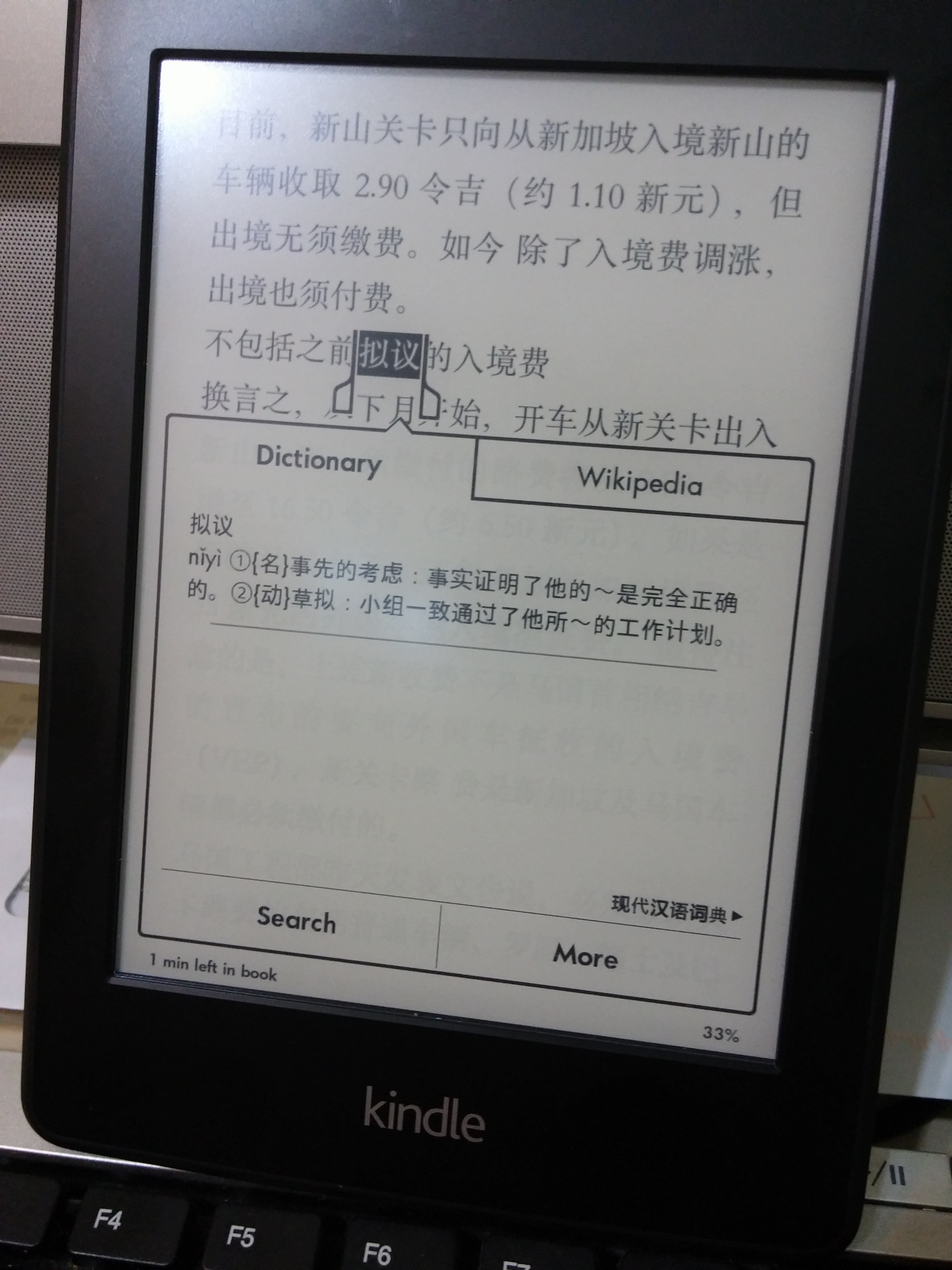
although we may argue that introvert-extrovert is a spectrum, many at times, introverts are expected to perform based on extroverts’ measures. it’s no surprise that fewer introverts are in leadership positions, cos a key mechanism for assessing someone’s suitability for a position is most often, interview. i’m not sure about other introverts, but i am definitely a fish who feels that it is a (monkey) climbing the tree test an interview is to me. Cain (2012) called it the Extrovert Ideal which all of us are expected to perform towards or under (:

2014-08-08-Susan Cain 2012 look inside
[acknowledgement: Amazon Look Inside of Susan Cain’s Quiet]

english dictation vs chinese dictation

today marks the opening session of ICT for SDL and CoL Clinic (traisi code 12470) for sec/jc/ci CL teachers. this course marks two first, a. the first blended learning course conducted at SCCL, and b. the first course i conduct at SCCL after joining the centre for 8 months. thanks to two fellow colleagues, Wu Jing and Anchi, who were there to lend support (:

during the class with 10 fellow CL teachers from 8 schools, i had a chance to share my view on the importance of questioning and be clear about the purpose(s) every time we introduce something (for e.g. an activity, an instruction, an approach) to our students.

this evening, i helped yh4 revised his english dictation taking place tmr. english dictation is carried out by the teacher reading aloud the words and punctuations, with students listening and writing out the passage on paper. last week this time, i helped yh3 revised his chinese dictation. chinese dictation is carried out by the students memorising 3 lengthy sentences and regurgitating them in class with pencil/pen & paper.

it appears that the practices of english dictation and chinese dictation haven been quite different with 30 yrs in between. i recalled going through such activities when i was a pri & sec student. i wonder when teachers carry out dictation, do anyone of us understand and/or question the purpose of carrying it out? until i do more research, i can only hypothesise that in english, the purpose is to assess if students could recall words as a whole, or to form words based on hearing pronunciation. ‘sound’ is closely associated with the word forms. at the same time, it could also be a training for students to sharpen their listening ability as they reproduce what they’ve heard in writing.

now, what’s the purpose of chinese dictation, aka mo-xie 默写? is the purpose just to test students’ ability to memorise chinese characters after characters? why arent chinese dictation carried out the english way? given that chinese characters are logograms, the purpose of testing students’ memory can likewise be achieved. why do we not use the same opportunity to sharpen students’ listening ability too? are any underlying assumptions about chinese language learning preventing chinese teachers from doing so? i suspect it is, for one, linked to the chinese’ belief of equating the ability to memorise as a virtue. but the larger question here is, how often do we revisit the purpose, or at a deeper level, our underlying assumptions about chinese language learning as we design our activities?

if i were a student, you really cant blame me for “liking” english lessons more than chinese lessons just by comparing the dictation activity alone. before we jump to the conclusion that it’s difficult to “interest” students to learn chinese, perhaps we should take time to reflect upon how we’re teaching the language, and the soundness of existing approaches. we could be a major culprit in ‘killing’ off the language though i doubt anyone would readily admit it.

MOOC, is it about education, or … ?

the word MOOC is running around my ears for the past week or so. so what does MOOC really offer? din have time to dwell too much into it, so let me just capture some thoughts based on quotes from a WSJ article “The Opportunities—and Risks—in the MOOC Business Model“. some quotes that caught my eyes:

“… the uncertainty that surrounds the nature of MOOCs as viable businesses.”

– should any institution embark on MOOC if it’s not to earn money from it? becos …

“High-quality ones are expensive to produce but well suited to efficiently broadcasting knowledge to large, distributed crowds.”

– knowledge is described as distributable entity. how much of a teacher’s knowledge belongs to static ‘distributable’ stuff? is knowledge broadcastable to begin with?

“… Why should a student listen to her local professor profess, if the same topic is available online from a more compelling instructor halfway across the globe?”

– lecturer’s ‘pull factor’ is extremely important.

“There still is too wide a gap between the idealistic promise of MOOCs as a means to democratize education and the ideological practice of using MOOCs as means to cut costs in already underfunded public universities”

– the ideal vs. implementation gap, as ever. looks like cost-cutting rules the day.

“They reduce the potential for teacher-student interaction, lessening the ability of the professor to provide individualized instructional support.”

– MOOC doesnt stamp from a social constructivist view of learning anyway. not it’s current form at least.

“Those best educators work at institutions that might benefit from their courses being sold online, as the competition crowds out all but the stars.”

– institutions sell and benefit from MOOC

“MOOCs have the potential to bring higher education and generate revenue from millions of students who don’t have access to today”

– again, it’s abt money-making for the institution

“MOOCs are globally accessible, so a weak MOOC can have adverse reputational consequences for its creating institution.”

– an institution’s reputation hangs in there. $$$ hangs in there too i supposed?

and one key reminder for myself, MOOC is a Higher Education entity. if our day-to-day affair concerns Teachers’ PD, how much does MOOC belong? these are entirely two different contexts with different needs; an attempt to plug-n-play like plugging in USB devices is dangerous.

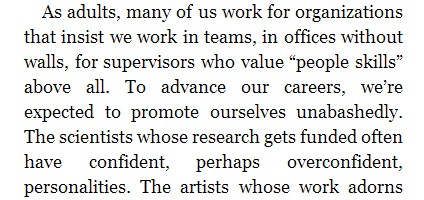
kindle paperwhite chinese english dictionaries

kindle paperwhite has many built-in dictionaries. for a learner of both English and Chinese language, you may want to make full use of this feature. if you have a kindle running in English (US) as your default language like me, your should have no difficulty locating the “Modern Chinese-English Dictionary”. This dictionary is hardly enough for a keen learner, for e.g. it doesn’t even have the pronunciation (hanyu pinyin) of the words!

Sometime having access to a full Chinese-Chinese dictionary is useful. To get this, you will need to do a ‘workaround’. The option for 现代汉语词典 (Xian Dai Han Yu Ci Dian) appears in my case after I:

1. set the language of my kindle to 简体中文
2. reboot into 简体中文 interface (with internet connection enabled)
3. go to ‘default dictionary for each language and you should now see 现代汉语词典 under the Chinese section.
4. select 现代汉语词典 as default dictionary
5. set the language of my kindle back to English (US)
6. reboot back to English (US) interface

and you should now have access to BOTH 现代汉语词典 and Modern Chinese-English Dictionary (:

a photo of my kindle with English interface with 现代汉语词典 activated:
140726-kindle chinese dictionary

[update 27/7]
i may have found a FASTER and easier way to install the dictionaries.
1. logon to your amazon account
2. go to “Manage your content and devices”
3. click on Show –> Dictionaries and User Guides
4. select the dictionary you want, and “Deliver” it to your kindle
5. enjoy (:

TALIS 2013

TALIS, which stands for OECD Teaching and Learning International Survey, final report 2013 was released yesterday. was first brought to the attention of it via some fb shares of the CNA report.

TALIS 2013 has an interactive webpage which allows users to make comparison between two countries, and the overall average. after making some chart comparisons between SG and Finland, i am glad our system is doing significantly a lot more (not sure statistically so or not) in terms of teachers’ PD. MOE’s belief that PD can improve our teachers and education as a whole is strongly reflected in the charts; this also matches my personal experience and belief (not sure how much belongs to MOE’s influence in this). CNA’s headline “Teachers in Singapore are … among the best-trained worldwide” rightly captured this gist.

another piece of writing related to the TALIS 2013 report is a blog post by Andreas Schleicher, Director of the OECD Directorate for Education and Skills. for those of us who dun have time (which is most of us and i confess i am one of us) to read the 442-page report, Schleicher has shared some of his takeaways which could be useful for us too. cut-n-paste a few quotes that i find meaningful [personally]:

  • “if a teacher is convinced that students learn better when they are encouraged to think through and solve problems on their own, then they are likely to use more active, student-centred approaches to teaching and learning” [this touches on the importance of teachers’ beliefs]
  • “constructive and fair teacher appraisals and feedback have a positive effect on teachers’ job satisfaction and on their confidence in their abilities as teachers” [teachers, students, we are all alike, aren’t we?]
  • “they should also work with other teachers to develop a system of peer feedback on all aspects of teaching, from lesson planning and classroom practice to student evaluation” [this requires a very open-mind about feedback. is strongly culturally related.]
  • “While in many countries there is a lot of debate about the ideal class size, TALIS finds that class size has no measurable impact on teaching efficacy. But teachers who reported that they teach classes where more than one in ten students are low academic achievers or have behavioural problems also reported significantly lower levels of confidence in their abilities to teach, or what is known as self-efficacy.” [work on our students’ self-efficacy, and the classroom size issue may just be no issue anymore?]
  • “Since TALIS finds that teachers who participate more in decision making in their school are also more likely to believe that society values teachers, they should be open to work together with colleagues and school leaders.” [ownership, buy-in … reminded me somewhat of SDL]